Honeydew Melon: A Nutritious Treat for Dogs

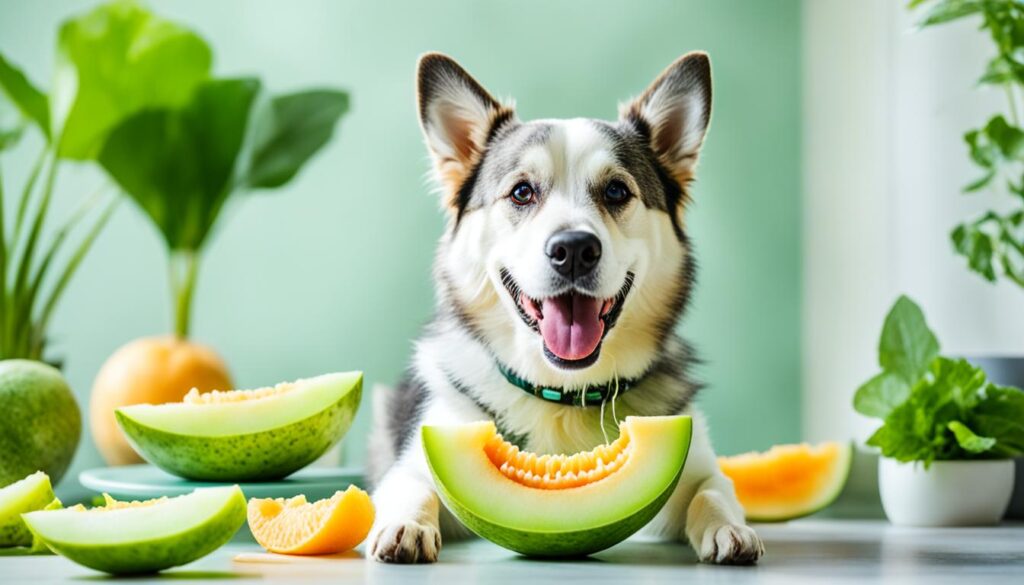
Honeydew melon is a safe and nutritious treat for dogs. It is low in calories and high in water content, making it a hydrating snack for your canine friend. Additionally, honeydew is a good source of fiber, niacin, folate, potassium, and vitamins A, C, and B6.
While honeydew is high in sugar, it can still be fed to dogs in moderation. However, dogs with diabetes or those who are overweight should avoid consuming honeydew. The rind and seeds of honeydew should be removed before feeding it to dogs to prevent digestive issues and choking hazards.
The recommended serving sizes vary depending on the size of the dog. Honeydew can be served as small cubes, as a food topper, frozen in a Kong® toy, or mixed with other dog-safe fruits to create a summer fruit salad.
Key Takeaways:
- Honeydew melon is a nutritious treat for dogs, low in calories and high in water content.
- It is a good source of fiber, niacin, folate, potassium, and vitamins A, C, and B6.
- Dogs with diabetes or those who are overweight should avoid consuming honeydew.
- Remove the rind and seeds of honeydew before feeding it to dogs to prevent digestive issues and choking hazards.
- Offer honeydew to dogs in moderation and in appropriate serving sizes.
Health Benefits and Considerations of Feeding Dogs Honeydew Melon
Honeydew melon offers several health benefits for dogs. It is packed with essential nutrients like vitamin C, vitamin A, calcium, and potassium, which contribute to your dog’s overall well-being. The low-fat content of honeydew makes it an excellent treat option for dogs who are watching their weight or have specific dietary restrictions. Additionally, the high water content in honeydew melon helps to keep your dog hydrated, particularly during hot summer months.
However, before introducing honeydew melon into your dog’s diet, it’s crucial to consult with your veterinarian to ensure it’s suitable for your pet’s specific needs and health conditions.
Just like humans, some dogs may be allergic to honeydew melon. It’s important to monitor your dog for any signs of an allergic reaction, such as itchiness, skin rash, or gastrointestinal issues, after eating honeydew melon. If you suspect an allergy, discontinue feeding this fruit to your dog and consult your veterinarian for further guidance.
Dogs with diabetes should consume honeydew melon in moderation due to its natural sugar content. While honeydew melon is generally safe for diabetic dogs, it’s always best to seek your veterinarian’s advice on appropriate serving sizes and frequency.
Additionally, dogs prone to urinary infections may need to avoid honeydew melon due to its potential impact on the urinary tract.
The Benefits of Honeydew Melon for Dogs:
- Rich in essential nutrients like vitamin C, vitamin A, calcium, and potassium
- Low in fat, making it a suitable treat for weight management
- Hydrating due to its high water content
Considerations for Feeding Dogs Honeydew Melon:
- Consult with your veterinarian before introducing honeydew melon into your dog’s diet
- Monitor for signs of allergic reactions
- Limit consumption for dogs with diabetes
- Avoid feeding honeydew melon to dogs prone to urinary infections
Honeydew melon can be a refreshing and nutritious addition to your dog’s diet when fed in moderation and under the guidance of your veterinarian. Remember to remove the seeds and rind before offering this delicious treat to your furry friend.
To summarize, honeydew melon provides dogs with beneficial nutrients and hydration. However, it’s essential to be mindful of your dog’s health conditions and consult your veterinarian to ensure the safe and appropriate integration of honeydew melon into their diet.
| Nutrient | Amount per 100g |
|---|---|
| Calories | 36 |
| Protein | 0.8g |
| Fat | 0.2g |
| Carbohydrates | 9g |
| Fiber | 0.6g |
| Calcium | 6mg |
| Potassium | 228mg |
| Vitamin C | 31.9mg |
| Vitamin A | 14IU |
Serving Honeydew Melon to Your Dog: Preparation and Tips
When it comes to serving honeydew melon to your dog, proper preparation is key to ensure safe consumption. Follow these tips to provide a dog-friendly honeydew melon serving:
- Peel the melon: Start by peeling off the skin of the honeydew melon. Dogs cannot digest the rind, so it’s important to remove it before serving.
- Remove the seeds: Take out the seeds from the honeydew melon, as they can pose a choking hazard for dogs. Cutting the melon into small, bite-sized pieces will also prevent any potential choking incidents.
- Flesh it out: You can use a melon baller to scoop out small, dog-friendly portions of the melon. This will make it easier for your dog to consume and enjoy.
- Variety of options: Honeydew melon can be served to dogs in various ways. You can offer it fresh, frozen, or even cooked. Just avoid feeding your dog honeydew melon sorbet or other treats with high sugar content, as excessive sugar can be harmful to their health.
- Supervision is key: While your dog is enjoying honeydew melon, it’s essential to supervise them to prevent choking or accidents. This way, you can ensure their safety while they savor the delicious treat.
It’s important to note that excessive consumption of honeydew melon can lead to digestive issues such as diarrhea and tooth decay in dogs. Therefore, it’s best to offer honeydew melon to your canine companion in moderation and as a special, occasional treat rather than a main food source.
Conclusion
In conclusion, honeydew melon can be a safe and nutritious treat for dogs when offered in moderation and prepared correctly. It is important to consider your dog’s individual health needs and consult with a veterinarian before introducing any new food into their diet.
Honeydew melon provides essential nutrients and hydration for dogs, making it a healthy alternative to high-calorie treats. However, it should not replace a balanced diet and should be served as an occasional treat. By following proper preparation methods and monitoring your dog while they eat honeydew melon, you can ensure a safe and enjoyable experience for your furry friend.
Remember, dogs and honeydew melon can go hand in hand, but always keep portions in check and remove the rind and seeds. With these precautions, honeydew melon can be a delicious and refreshing addition to your dog’s treat repertoire.
FAQ
Can dogs have honeydew melon?
Yes, honeydew melon can be a safe and nutritious treat for dogs when offered in moderation and prepared correctly.
What are the benefits of honeydew melon for dogs?
Honeydew melon contains essential nutrients like vitamin C, vitamin A, calcium, and potassium. It is also low in fat, making it suitable for dogs who are watching their weight.
Can dogs be allergic to honeydew melon?
Yes, some dogs may be allergic to honeydew melon, so it’s important to monitor for any signs of an allergic reaction.
Should dogs with diabetes avoid consuming honeydew melon?
Yes, dogs with diabetes or those prone to urinary infections should avoid consuming honeydew melon.
How should honeydew melon be prepared for dogs?
Start by peeling the melon and removing the seeds. Cut the melon into small, bite-sized pieces to prevent choking. Honeydew melon can be served fresh, frozen, or cooked.
Can honeydew melon replace a balanced diet for dogs?
No, honeydew melon should be served as an occasional treat and not replace a balanced diet for dogs.