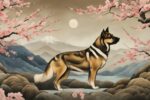
Cu Chulainn and the Mythical Hounds: Celtic Legends Unveiled

Cu Chulainn and the Mythical Hounds: Celtic Legends Unveiled: Mythological foxes are very important in Celtic culture, as shown by the stories of Cu Chulainn and his dog friends. In Celtic legend, Cu Chulainn is a hero as well as a god. He is also called Cú Chulainn or the Hound of Culann. Cu Chulainn is famous for his brave actions and fierce fighting style. He is thought to be the expression of the Irish god Lugh.
He was named Cu Chulainn, which means “Culann’s hound,” because he bravely offered to take the place of Culann’s fierce guard dog in an important event. This action shows how brave and loyal Cu Chulainn is. Besides this, Cu Chulainn is linked to dogs in many other stories, especially his loyal dogs Bran and Sceolan. These loyal dogs, who were thought to be related to him, fought with him and went on hunts with him. This shows that Cu Chulainn was related to mythical hounds in Celtic mythology.
People in Celtic folklore hold a special place in their hearts for the loyal and protective qualities that dogs possess. There is a lot of meaning in these traits, and the stories of Cu Chulainn and his dogs show how these mythical animals are still important in Irish culture. In modern times, both readers and writers are still fascinated by the stories of Cu Chulainn and the importance of dogs.
The Warrior Demigod: Cu Chulainn and his Great Deeds
Celtic mythology reveres Cu Chulainn, the Hound of Culann, for his bravery and epic achievements. He is unique among Celtic gods and mythical creatures as a warrior hero and demigod. Cu Chulainn’s courage and heroism have fascinated spectators for generations due to his combat fury and power.
Cu Chulainn is perhaps most known for the Táin Bó Cúailnge, or Cattle Raid of Cooley. In this epic, Cu Chulainn single-handedly defends Ulster from Connacht’s army, demonstrating his battlefield prowess. The ríastrad or warp spasm, where his muscles bulge and body contorts into a terrifying form, demonstrates his superhuman abilities.
Cu Chulainn’s magnificence goes beyond strength. Honor and loyalty are also his hallmarks. In Culann’s hound, Cu Chulainn accidently kills the blacksmith’s powerful guard dog. He promises to be the guard dog hold until a replacement is found to make amends. Cu Chulainn’s selflessness cements his place in Celtic tradition.
| Notable Achievements of Cu Chulainn |
|---|
| Defending Ulster against the army of Connacht in the Táin Bó Cúailnge |
| Manifesting the ríastrad, a fearsome transformation that brings out his superhuman strength |
| Offering to take the place of the slain guard dog of Culann as an act of penance |
| Showing unwavering loyalty to his hounds, Bran and Sceolan, who accompany him in battles and hunts |
The tales of Cu Chulainn and his great deeds continue to inspire and capture the imagination of people today. His stories, steeped in Celtic mythology and Irish folklore, highlight the values of courage, loyalty, and honor. The enduring legacy of Cu Chulainn serves as a reminder of the rich tapestry of Celtic culture and the mythical heroes that continue to fascinate us.
The Origin of Cu Chulainn’s Name: Culann’s Hound
Cu Chulainn’s name, which means “Culann’s hound,” comes from a spectacular event in Celtic mythology that serves as a testament to the hero’s dogged will.According to Irish folklore, Culann, a skilled blacksmith, owned a fierce and formidable guard dog. When the dog died, Culann sought a replacement to protect his home. Hearing of this, Cu Chulainn, then a young boy named Setanta, volunteered to take on the role.
Recognizing the boy’s courage and sense of duty, Culann eagerly accepted Setanta’s offer. From that moment on, Setanta trained diligently to become a worthy guardian in the place of Culann’s fallen hound. His commitment and skill in combat earned him the name Cu Chulainn, signifying his transformation into Culann’s hound.
The Tale of Cu Chulainn and the Hound of Culann
“The name Cu Chulainn, meaning ‘Culann’s hound,’ is derived from a remarkable event that unfolded in Celtic legend and showcases Cu Chulainn’s unwavering determination.”
This story serves as a powerful testament to Cu Chulainn’s loyalty, selflessness, and indomitable spirit. It highlights his willingness to protect and serve others, even at a young age. Cu Chulainn’s bond with Culann’s hound became a defining characteristic of his legend, symbolizing his power and unwavering determination in the face of adversity.
| Cu Chulainn’s Name | Meaning |
|---|---|
| Cu Chulainn | Culann’s hound |
The tale of Cu Chulainn and the hound of Culann remains a significant aspect of Celtic mythology, showcasing the deep respect and reverence for dogs in Irish folklore. Dogs were often considered protectors, companions, and symbols of loyalty, mirroring the qualities attributed to Cu Chulainn himself. This enduring legend continues to captivate audiences and serves as a testament to the rich tapestry of Celtic lore.
Cu Chulainn’s Faithful Companions: Bran and Sceolan
Among Cu Chulainn’s esteemed companions, Bran and Sceolan, his faithful hounds, played a crucial role in his journeys and served as symbols of loyalty and companionship.
It was thought that these mythical dogs were his blood relations, connected to him via a strong bond developed over innumerable adventures and conflicts.
Bran, whose name means “raven,” was renowned for his quickness and agility and wore a jet-black coat. On the other side, Sceolan was well-known for his bravery and strength and wore a coat with a lighter color.
Together, they formed an inseparable trio with Cu Chulainn, standing as a formidable force in the face of any challenge.
“Bran and Sceolan were by his side, their keen senses and unwavering loyalty guiding him through the darkest of times,” spoke the storytellers, recounting the epic tales of Cu Chulainn’s heroic deeds.
These mythical hounds embodied the values of Celtic mythology, representing the strength, resilience, and unwavering loyalty cherished in the culture. They fought alongside Cu Chulainn with unmatched ferocity, never hesitating to protect their master or aid him in his quests. So deeply rooted were they in Celtic folklore that their legacy continues to captivate hearts and imaginations to this day.
| Hound | Attributes |
|---|---|
| Bran | Jet-black coat, speed, agility |
| Sceolan | Light-colored coat, strength, fearlessness |
As revered symbols of loyalty and the connection between humans and nature, Bran and Sceolan represent the enduring bond between man and beast in Celtic mythology. Their tales serve as a reminder of the qualities valued by the ancient Celts and continue to inspire storytellers, artists, and enthusiasts, keeping the spirit of Cu Chulainn and his loyal hounds alive in the rich tapestry of Irish folklore and beyond.
The Significance of Dogs in Celtic Mythology
Celtic myths said that dogs were very important and that people praised them for being loyal and able to keep people safe. A brave god named Cu Chulainn showed them how important they were. Bran and Sceolan, his dogs, were like family and friends to him. They were loyal and had a link to the mysterious. The close link between people and the supernatural was shown by these magical dogs that were said to be able to see into the future.
Some Celtic gods and goddesses were linked to dogs, which were thought to be loyal and watchful. They kept people safe from evil forces, which showed how closely people are linked to nature. This made Celtic mythology even more interesting.
Supernatural Canine Creatures in Celtic Folklore
Celtic folklore abounds with various supernatural canine creatures, captivating the imagination with their magical attributes and mysterious origins. These mythical hounds play significant roles in Celtic mythology, adding depth and intrigue to the rich tapestry of folklore. One such creature is the Barghest, a spectral black dog that roams the moors of northern England and the Scottish Highlands. It is said to be an omen of death, appearing to foretell the demise of those who encounter it.
Another intriguing canine creature is the Cù Sìth, a giant fairy dog from Scottish folklore. Known for its shapeshifting abilities, the Cù Sìth is often depicted as a large black hound with glowing red eyes. Legend has it that it steals the souls of the deceased and carries them to the Otherworld. Hearing its howl at night is believed to be a harbinger of imminent death.
In addition to these eerie creatures, Celtic folklore also features the Gwyllgi, a ghostly dog from Welsh mythology. Often seen as a harbinger of danger and misfortune, the Gwyllgi is described as a large black dog with fiery eyes. It is said to roam the Welsh countryside, terrifying travelers and guarding the entrance to the land of the dead.
| Supernatural Canine Creatures in Celtic Folklore | Origin | Physical Appearance | Role |
|---|---|---|---|
| Barghest | Northern England, Scottish Highlands | Spectral black dog | Omen of death |
| Cù Sìth | Scotland | Shapeshifting giant dog | Stealer of souls |
| Gwyllgi | Wales | Large black dog with fiery eyes | Harbinger of danger |
“The supernatural canine creatures in Celtic folklore embody the enigmatic and mysterious nature of the Celtic culture, fascinating both locals and outsiders. Their presence in folklore serves as a reminder of the profound connection between the physical and spiritual realms in Celtic mythology.”
These supernatural canine creatures in Celtic folklore embody the enigmatic and mysterious nature of the Celtic culture, fascinating both locals and outsiders. Their presence in folklore serves as a reminder of the profound connection between the physical and spiritual realms in Celtic mythology.
The Enduring Legacy of Cu Chulainn and His Hounds
The legends of Cu Chulainn and his loyal hounds continue to resonate in Irish folklore, their heroic deeds and unwavering bond captivating generations. Cu Chulainn, also known as the Hound of Culann, was a revered warrior hero and demigod in Celtic mythology. Believed to be the incarnation of the Irish god Lugh, he was renowned for his great feats and battle frenzy.
The name Cu Chulainn translates to “Culann’s hound,” which originated from an incident where Cu Chulainn killed Culann’s fearsome guard dog and offered to take its place as his protector. This act of bravery and selflessness exemplified Cu Chulainn’s character and solidified his connection with dogs in Celtic legend.
One of the most notable aspects of Cu Chulainn’s story is his loyal companions, Bran and Sceolan. These hounds, believed to be his relatives, stood by his side in battles and hunts. Their unwavering loyalty and courage mirrors the valued traits attributed to dogs in Celtic mythology, emphasizing their protective abilities and deep bond with humans.
| Cu Chulainn and His Hounds | Celtic Mythology | Irish Folklore |
|---|---|---|
| The heroic deeds of Cu Chulainn and his hounds | Significance of dogs in Celtic mythology | Celebration of their stories in contemporary culture |
| Bran and Sceolan as loyal companions | Supernatural creatures in Celtic lore | Continued fascination with Celtic legends and creatures |
| Legacy of Cu Chulainn and his courageous offer | The enduring charm of Celtic folklore and mythology | Contemporary celebrations of Celtic legends |
The profound significance of Cu Chulainn and his hounds extends beyond Celtic mythology and folklore. Their stories have become emblematic of bravery, loyalty, and the enduring bond between humans and their animal companions. Even today, the tales of Cu Chulainn and his loyal canines continue to inspire and captivate, keeping the spirit of Celtic legend alive in the hearts and imaginations of many.
The Role of Dogs in Celtic Culture and Society
Dogs held a prominent place in Celtic culture, serving as faithful companions and protectors in everyday life.
Celtic myth and history held these creatures in the highest esteem for their valor, unflinching allegiance, and supernatural prowess. In addition to being effective hunting and herding friends, they also fulfilled the function of protectors and emblems of safety.
Celtic people considered dogs to be sacred, sometimes included them in religious ceremonies, celebrations, and even funerals. They were venerated because of the popular idea that they could communicate with the Otherworld, where gods and spirits reside. People believed that their dogs might help them connect with the supernatural and protect them from harm.
| Celtic Mythological Dogs | Meaning and Significance |
|---|---|
| Cu Chulainn’s Hounds: Bran and Sceolan | Symbolized loyalty, strength, and kinship |
| Cernunnos’s Companion | Represented the wild, untamed forces of nature |
| Black Dogs | Guardians of the Underworld and protectors against evil spirits |
Many ancient Celtic tribes, such as the Gauls and the Britons, held specific breeds, like the Irish Wolfhound and the Scottish Deerhound, in high regard. These enormous, powerful dogs were symbols of status and prestige for nobility. They were also respected for hunting and animal protection.
The deep reverence for dogs in Celtic culture continues to be evident today. Celtic festivals and gatherings often feature dog-themed events and activities, highlighting the enduring legacy of these beloved companions. From mythical tales to everyday life, dogs remain an integral part of Celtic folklore, embodying the values of loyalty, bravery, and protection.
Mythical Hounds in Scottish Folklore
Scottish folklore also depicts mythological hounds, each with its own particular attributes and tales of courage. One such fabled dog is the Cù Sìth, a phantom beast from Scottish mythology. The Cù Sth, supposedly a huge black hound with blazing red eyes, prowls the Scottish Highlands, protecting both the land and its people. It is said to have the ability to transform into a human form, giving the impression of a towering black guy with bloodshot eyes.
Another famous dog of Scottish folklore is the Barghest, a terrible animal noted for its malicious attitude. The Barghest is portrayed as a huge, black dog with fiery eyes that may offer fright and tragedy to any who meet it. According to legend, the Barghest is a harbinger of death, entering at night to forewarn of approaching tragedy.
Scottish mythology includes the Leanhaun Shee, a fairy figure often associated with hounds, in addition to the Cù Sìth and Barghest. Charismatic and sensual, the Leanhaun Shee inspires authors and painters but is also forceful and unpredictable. It should keep a spirit hound as a friend and add magic to its presence.
| Mythical Hound | Attributes |
|---|---|
| Cù Sìth | Protective, shape-shifting, roaming the Highlands |
| Barghest | Sinister, foretells death, causes misfortune |
| Leanhaun Shee | Seductive, inspires creativity, associated with fae |
These mythical hounds are just a glimpse into the captivating world of Scottish folklore and the rich tapestry of mythical creatures that inhabit it. They continue to enchant and intrigue, serving as a reminder of the enduring allure of Celtic mythology and the enduring power of storytelling.
The Magic and Mystery of Supernatural Creatures in Celtic Lore
Fans are still drawn to the magical and mysterious world of the Celts, where mythical animals like hounds live. Irish and Scottish myths and folklore are more magical because of these strange beings.
In Celtic legend, there are supernatural beings with special abilities. The warrior god Cu Chulainn and his loyal dogs Bran and Sceolan are examples of Celtic culture. So are the magical beings of Ireland and Scotland.
These beings are important because they can connect the physical and mental worlds. In Celtic folklore, dogs are linked to loyalty, safety, and a closeness to nature. They look out for heroes like Cu Chulainn and help them.
Mythical animals from the Celts still inspire artists, writers, and storytellers today. Their impact on modern society can be seen in literature, art, festivals, and reenactments. These creatures help us understand Celtic history and mythology better by showing us a world full of magic, wonder, and old knowledge.
Exploring Folklore Creatures in Celtic Mythology
There are many animals in Celtic mythology, and each one has its own personality and meaning. Celtic folklore is full of magical beings, like tall dragons and naughty fairies, that have captivated storytellers for many years.
One example is the selkie, a mythical creature that swims as a seal and sheds its skin to become a person. Because they are so beautiful and sad, selkies show up in stories about love, loss, and the clash between the real world and the magical world.
Another interesting Celtic monster is the kelpie, a shape-shifting water spirit that shows up as horses near rivers and lakes. People often say that kelpies look like beautiful, soft horses. They take unaware victims on their backs and drag them into the water, where they are never seen again.
A well-known Celtic monster is the Banshee, a female spirit that tells people they are going to die. Banshee wails at night are a sign that bad things are about to happen. She is usually shown as a ghostly woman in long white dresses who scares and fascinates people for generations.
| Creature | Traits | Significance |
|---|---|---|
| Selkie | Shapeshifter, melancholic | Symbolizes the duality of human and magical realms |
| Kelpie | Shape-shifting water spirit, deceiving | Represents the dangers of nature and the unknown |
| Banshee | Mournful, foretells death | Brings a sense of foreboding and the inevitability of mortality |
“The Selkie’s haunting beauty and the Kelpie’s deceptive allure serve as cautionary tales, reminding us of the complexities of the natural world and the need for vigilance.”
These folklore creatures, and many others like them, are woven into the fabric of Celtic mythology. They not only entertain and captivate but also carry deeper meanings and lessons that resonate with human experiences and emotions.
We discover a world of mythical creatures that captivate as we explore Celtic folklore. Their tales and symbolism have shaped Celtic culture and given us a glimpse into a magical world that still captivates us.
Unveiling the World of Mythical Creatures in Celtic Legend
Celtic mythology depicts a magical world where mythical creatures combine ancient beliefs with timeless tales. Celtic folklore weaves a rich tapestry of fantastic and terrifying creatures from Ireland to Scotland, leaving an indelible mark on culture.
Cu Chulainn, a brave and loyal hero, is central to this mythology. In Celtic culture, the Hound of Culann represents the close bond between humans and dogs. With his loyal dogs Bran and Sceolan, Cu Chulainn’s adventures demonstrate dogs’ revered status as companions and protectors.
The Celtic pantheon is rounded out with ominous mythological beings like the shapeshifting Pca and the eerie Bean Sidhe. The Fomorians, terrible monsters that oppose the holy Tuatha Dé Danann, only add to the allure of this mythical world.
Beyond Cu Chulainn, these mythical beings’ charm permeates festivals, artwork, and literature, celebrating the deep connection between humans and the magical natural world in Celtic legend.
The Enduring Charm of Celtic Folklore and Mythology
Celtic folklore and mythology have captivated readers for centuries with their tales, fascinating creatures, and rich cultural history. Ancient Celtic traditions from Ireland and Scotland have created a magical tapestry that inspires and fascinates people worldwide.
Celtic folklore and mythology revolve around mythological animals. These animals, from delicate and elusive fairies to powerful and terrible dragons, provide wonder and magic to the stories, taking readers to another realm.
Cu Chulainn, a demigod and legendary Celtic warrior. Cu Chulainn, the Hound of Culann, is a symbol of Celtic might, bravery, and devotion. Legends of his astounding battles, strange skills, and passionate friendships have fascinated and won the hearts of Irish people for years.
| Celtic Mythology | Irish Folklore | Scottish Folklore |
|---|---|---|
| Supernatural Creatures | Folklore Creatures | Mythical Creatures |
The allure of Celtic mythology and folklore dates back millennia, but it hasn’t lost any of its luster. Festivals, art exhibitions, and contemporary literary and film adaptations all exist to honor these incredible tales in the current world. The everlasting attractiveness of Celtic folklore and mythology is a monument to the power of storytelling and the timeless appeal of mythical creatures and legendary heroes.
Contemporary Celebrations of Celtic Legends and Creatures
Celtic mythology has had a big impact on modern society, and you can see it in art, literature, and lively festivals. The Beltane Fire Festival in Scotland and Féile na Bealtaine in Ireland are examples of modern celebrations that bring Celtic stories to life by reenacting old practices.
Many kinds of visual and performing arts, like paintings, statues, plays, and musicals, are very important in telling and remembering Celtic stories. The magical allure of dragons, fairies, and other mythical creatures is preserved for new audiences.
Writers like J.R.R. Tolkien continue to honor Celtic myths in their works.Tolkien, C.S. Lewis, and Patricia Briggs drawing on them to create interesting stories. The rich tapestry of Celtic mythology continues to captivate and inspire people all over the world through these artistic forms.
Contemporary Celebrations in Literature
American urban fantasy author Patricia Briggs has effectively blended Celtic mythology into her Mercy Thompson series. Mercy Thompson, a shapeshifting mechanic, meets Fae and werewolves from Celtic mythology. Briggs masterfully mixes Celtic mythology with modern urban settings in her captivating stories.
Celtic culture and mythology inspires creators and fans, which is its lasting appeal. These old legends and animals’ celebrations develop and adapt, preserving their charm and mystery for future generations.
| Festivals | Art | Literature |
|---|---|---|
|
|
|
Conclusion
People are still moved by the dogs from Celtic myth: Cu Chulainn, Bran, and Sceolan. The Celtic mythological dog Cu Chulainn, also known as the Hound of Culann, represents Lugh’s ferocity and desire for battle.
Since Cu Chulainn replaced Culann’s menacing guard dog, his hounds have a special significance in Celtic mythology, representing devotion and safety. Dogs are significant symbols in Irish and Scottish culture because they play important roles as companions and protectors in Celtic mythology.
Celtic festivals and artwork keep the legends of mystical hounds and other fantastical beasts alive in modern society. These tales of heroism and the fantastic have been repeated for centuries, and their impression on our brains remains firm.
FAQ
Q: Who is Cu Chulainn?
A: A mythical Celtic god of war and combat Cu Chulainn may represent Lugh in human form, according to legend.. He is legendary for his heroic acts and ferocity in combat.
Q: What does Cu Chulainn’s name mean?
A: In English, Cu Chulainn means “Culann’s hound.” The legend states that he killed Culann’s vicious guard dog and volunteered to take its place, hence the name..
Q: Who were Cu Chulainn’s loyal companions?
A: Bran and Sceolan, which many assumed were related to Cu Chulainn, were his faithful canine companions. They accompanied him in battles and hunts.
Q: Why were dogs significant in Celtic mythology?
A: Legends and tradition attribute dogs’ devotion and protective qualities, which made them highly prized in Celtic mythology.
Q: Is there still a place in Irish tradition for Cu Chulainn’s stories?
A: Indeed, Irish folklore still honors Cu Chulainn’s tales and the importance of dogs in Celtic mythology.