Essential Dog Training Techniques for New Owners

Welcome to a world of wagging tails and slobbery kisses! As a new dog owner, embarking on the journey of pet companionship is an exciting and fulfilling experience. However, it’s essential to remember that along with the joys of having a furry friend comes the responsibility of training them effectively. Basic dog training is the key to ensuring pet obedience and building a strong bond with your dog.
In this article, we will explore essential dog training techniques that every new owner should know. From understanding the importance of positive reinforcement training to finding the right rewards for your four-legged pal, we’ve got you covered. Consistency in training and breaking behaviors down into manageable steps are also critical aspects we’ll delve into.
So, whether you’re just starting out or looking to enhance your training skills, this guide will provide you with valuable insights and practical tips to help you and your furry companion thrive. Let’s dive into the world of dog training and discover the secrets to a harmonious and fulfilling relationship between you and your dog.
Importance of Positive Reinforcement Training
Positive reinforcement training is widely regarded as the most effective method of dog training. This technique focuses on rewarding good behavior, rather than punishing bad behavior. By using positive reinforcement, you are avoiding punishment and reinforcing the association between good behavior and rewards, motivating your dog to continue behaving well.
Positive reinforcement training involves the use of rewards such as treats, praise, or playtime to encourage and reinforce desired behaviors. When your dog exhibits good behavior, it is essential to provide immediate positive reinforcement to strengthen the connection between the behavior and the reward. This positive association will increase the likelihood of your dog repeating the desired behavior in the future.
“A positive reinforcement approach to dog training is not only effective but also helps to build trust and strengthen the bond between you and your furry companion.”
– Professional Dog Trainer, Sarah Thompson
Unlike punishment-based training methods that may elicit fear or anxiety in your dog, positive reinforcement training creates a positive learning environment. It allows your dog to feel safe, happy, and motivated to learn. By focusing on rewarding good behavior, you can effectively teach your dog what is expected of them, leading to a well-behaved and well-adjusted pet.
It is important to note that positive reinforcement training does not mean ignoring unwanted behavior. Instead, it involves redirecting your dog’s attention to more appropriate behaviors and rewarding those instead. By consistently rewarding desirable behavior, you can gradually diminish the occurrence of undesirable behavior.
However, it is crucial to avoid inadvertently rewarding unwanted behavior. For example, if your dog jumps on you when greeting, wait for them to calm down before giving any attention or reward. This reinforces the idea that calm behavior is more beneficial and desirable.
In summary, positive reinforcement training is a powerful and effective method for shaping your dog’s behavior. It focuses on rewarding good behavior and avoiding punishment, creating a positive learning environment that strengthens the bond between you and your furry friend.
https://www.youtube.com/watch?v=kqV4PQNJ8lI
| Benefits of Positive Reinforcement Training |
|---|
| 1. Creates a positive learning environment |
| 2. Strengthens the bond between you and your dog |
| 3. Builds trust and confidence in your dog |
| 4. Motivates your dog to exhibit good behavior |
| 5. Reduces the likelihood of fear or anxiety-related behavior problems |
Finding the Right Rewards
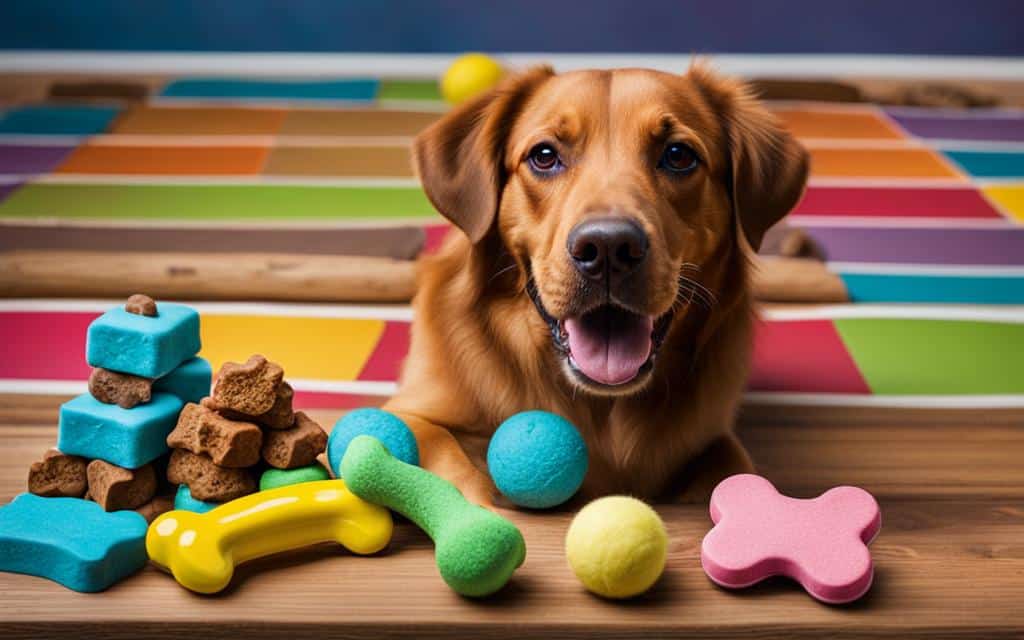
Dogs have different preferences when it comes to rewards. Understanding what motivates your dog is essential for successful training. Some dogs are highly food-motivated and respond well to edible treats, while others may be more motivated by play sessions with their favorite toys or affectionate praise.
It is important to experiment with different types of rewards and observe how your dog responds to each one. By finding the right rewards, you can effectively reinforce good behavior during training sessions and keep your dog motivated.
Food Rewards
Food rewards are one of the most common and effective types of rewards for dogs. Many dogs are naturally food-motivated and find treats highly rewarding. When using food rewards, it is important to choose treats that are small, soft, and easy to consume quickly. This allows for faster training sessions as your dog can quickly receive the reward and continue with the training.
Quote: “Using food rewards in training can help create a positive association with desired behaviors, making your dog more likely to repeat them.” – Dr. Sarah Anderson, Veterinary Behaviorist
Play Rewards
Some dogs may be more motivated by play and interaction rather than food. Play rewards can include playing fetch with a favorite toy, engaging in a tug-of-war game, or providing access to a playmate such as another well-behaved dog. These rewards are particularly effective for dogs who have a strong prey drive or enjoy physical activities.
Quote: “For dogs who are highly motivated by play, incorporating play rewards into training can make the learning process more enjoyable and engaging.” – Emily Thompson, Professional Dog Trainer
Affectionate Rewards
Many dogs thrive on human attention and affection. Verbal praise, petting, and gentle belly rubs can be extremely rewarding for dogs who are motivated by affection. These rewards are particularly effective for dogs who have a strong bond with their owners and seek approval and attention.
Quote: “Affectionate rewards can strengthen the bond between a dog and their owner, creating a positive emotional connection that enhances the training experience.” – Dr. James Peterson, Canine Behavior Specialist
By understanding what motivates your dog and using a combination of food rewards, play rewards, and affectionate rewards, you can create a training program that is tailored to your dog’s individual preferences and needs. Remember to always keep training sessions enjoyable and positive, using rewards as a way to reinforce desired behaviors.
Consistency in Training
Consistency is crucial in dog training. By using the same cues and commands consistently, you can effectively communicate your expectations to your furry friend. Dogs thrive on consistency, as it helps them understand what is expected of them and reduces confusion. Whether you are teaching basic commands or working on more advanced behaviors, using consistent cues will reinforce your dog’s understanding and speed up the training process.
One of the key aspects of consistency in training is ensuring that everyone in the household follows the same set of rules. Dogs are quick to pick up on inconsistencies, so if one family member allows certain behaviors while another does not, it can confuse the dog and hinder progress. Establishing a unified approach to training will provide clarity and make it easier for your dog to understand and obey.
The Power of Using the Same Cues
Using the same cues for specific commands is crucial for effective training. For example, if you use the word “sit” as the cue for the command, stick to it consistently instead of using different variations like “sit down” or “take a seat.” Using consistent cues helps your dog recognize patterns and associate them with the desired behavior, making it easier for them to respond correctly.
Consistency also extends to your body language and tone of voice. Dogs are highly perceptive and can pick up on subtle cues. Using the same gestures and tone when giving commands will reinforce your dog’s understanding of what is expected from them.
Consistency is the key to successful training. It provides clear communication and helps dogs understand and remember what is expected of them. By using consistent cues, commands, and body language, you create a structured environment that promotes learning and obedience.
Household Consistency
Consistency should not only apply to training sessions but also to your dog’s daily routines and interactions within the household. Consistent rules, boundaries, and expectations help reinforce good behavior and prevent confusion. For example, if your dog is not allowed on the furniture, it is important for everyone in the household to enforce this rule consistently. Inconsistency can lead to confusion and make it harder for your dog to understand what is permissible.
Whether it’s feeding schedules, exercise routines, or house rules, maintaining consistency in all aspects of your dog’s life will contribute to their overall well-being and training success. When everyone in the household is on the same page, it provides a harmonious environment that supports your dog’s learning and development.
| Benefits of Consistency in Dog Training | Consistency |
|---|---|
| Establishes clear communication | Minimizes confusion |
| Reinforces desired behaviors | Facilitates faster learning |
| Creates a structured environment | Promotes obedience |
| Fosters a strong bond between you and your dog | Builds trust and mutual understanding |
Consistency is key when it comes to dog training. By using the same cues and commands consistently, as well as maintaining household consistency, you can create a structured and harmonious environment that promotes learning and obedience. This will not only make the training process more efficient but also strengthen the bond between you and your dog.

Short and Frequent Training Sessions
When it comes to dog training, short and frequent sessions yield better results compared to long training sessions. According to the American Kennel Club, it is recommended to keep each training session under five minutes. This duration helps to prevent distractions and frustrations for both you and your dog.
Repetition is key in dog training. By practicing the same commands consistently, you reinforce the desired behavior and help your dog understand what is expected of them. However, dogs can struggle with generalizing commands to different situations.
To ensure that your dog responds consistently in various contexts, it is beneficial to repeat the training sessions in multiple locations and with varying levels of distractions. This helps your dog generalize the commands and understand that the same rules apply regardless of the environment or level of distraction.
By incorporating short and frequent training sessions into your routine, you can effectively reinforce behaviors and improve your dog’s responsiveness to commands in different scenarios.
Breaking Behaviors Down
Complex behavior training can be a challenging task for dogs. However, by breaking these behaviors down into smaller parts and using a step-by-step approach, you can make the training process easier and more successful for your furry friend. This method allows your dog to understand and master each component of the behavior before moving on to the next step.
For example, let’s consider the command “come.” Instead of expecting your dog to immediately grasp the entire behavior, break it down into manageable steps. Start by rewarding and praising your dog for taking even one step towards you when called. Gradually increase the number of steps required before giving a reward, until your dog reliably comes to you when called.
This step-by-step approach not only helps your dog learn complex behaviors more effectively but also builds their confidence and motivation. By reinforcing each step of progress, your dog gains a clear understanding of what is expected and is more likely to succeed in their training.
Remember, patience is key when training complex behaviors. Be consistent, use positive reinforcement, and give your dog the time they need to understand and master each step. With a thoughtful and systematic training approach, you can help your dog develop new skills and behaviors while strengthening your bond.
Conclusion
Training your dog is a rewarding journey that requires patience, consistency, and positive reinforcement. By implementing the essential training techniques discussed in this article, new dog owners can establish a strong bond with their pets and ensure obedience.
Remember, training is a gradual process, so celebrate the small wins along the way. Acknowledge your dog’s progress and reward their good behavior to motivate them further.
If you find yourself struggling or need guidance, don’t hesitate to seek professional assistance. Dog trainers and behaviorists have the expertise to address specific training challenges and provide tailored solutions for you and your dog.
With dedication and proper training, you and your furry friend can enjoy a harmonious and fulfilling relationship. Start implementing these training tips today, and witness the positive transformation in your dog’s behavior.
FAQ
What are some basic dog training techniques for new owners?
Some basic dog training techniques for new owners include positive reinforcement, consistency, and breaking behaviors down into smaller parts.
What is positive reinforcement training?
Positive reinforcement training focuses on rewarding good behavior rather than punishing bad behavior, motivating dogs to continue behaving well.
What types of rewards should I use for dog training?
Dogs have different preferences when it comes to rewards. Some dogs are food-motivated and respond well to edible treats, while others may prefer play sessions with toys or affectionate praise.
How important is consistency in dog training?
Consistency is crucial in dog training. It involves using the same cues and commands consistently and ensuring that everyone in the household follows the same rules.
How long should training sessions be?
Training sessions should be kept to a maximum of five minutes to avoid distractions or frustration. Short and frequent training sessions are more effective than longer ones.
How can I teach my dog complex behaviors?
Breaking complex behaviors down into smaller parts and reinforcing each step of progress can make the training process easier for your dog. Start with rewarding even small progress towards the desired behavior.
What should I do if I need professional help with dog training?
If you need professional assistance with dog training, consider seeking help from a professional dog trainer who can provide guidance and support throughout the training process.